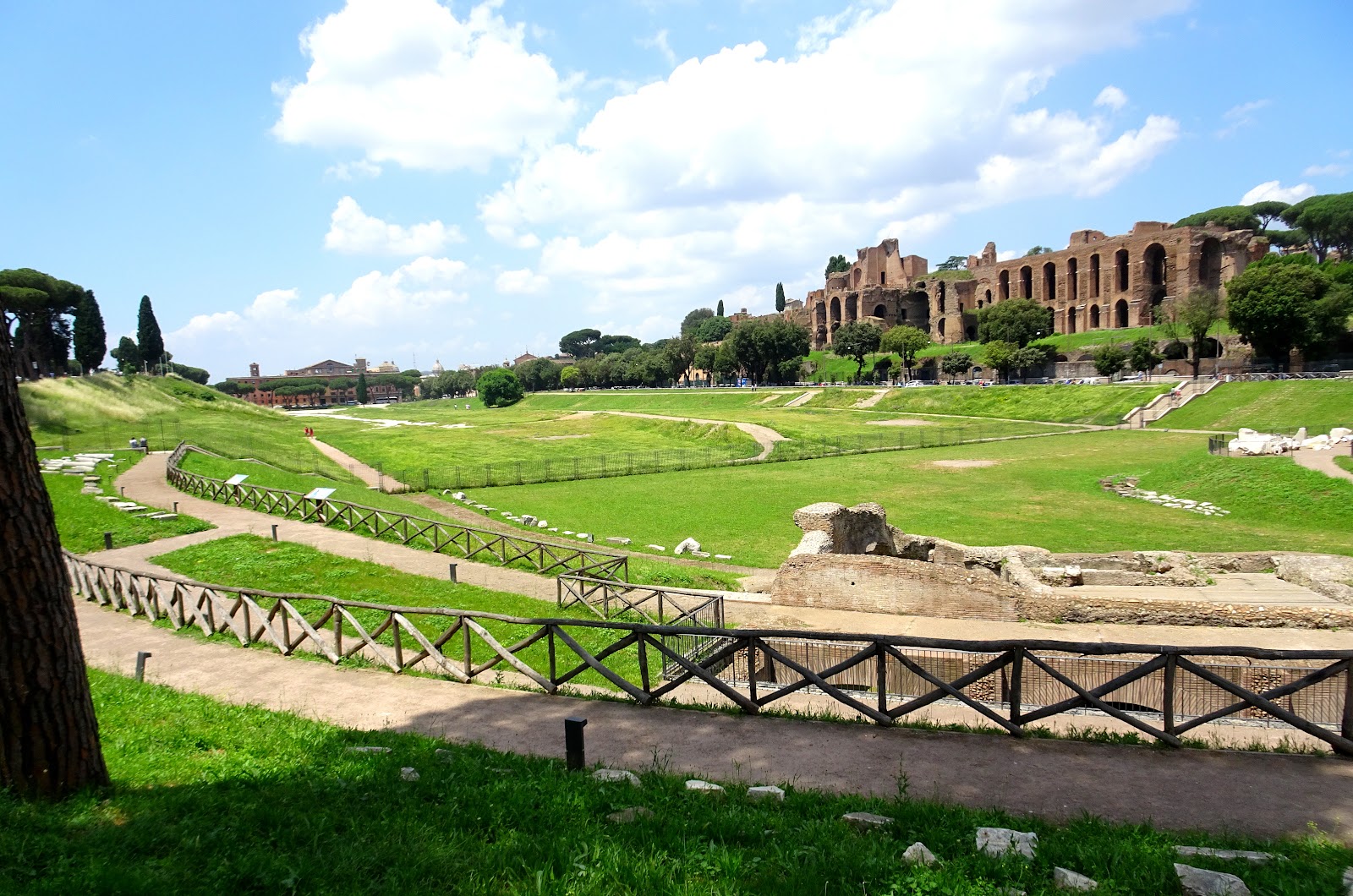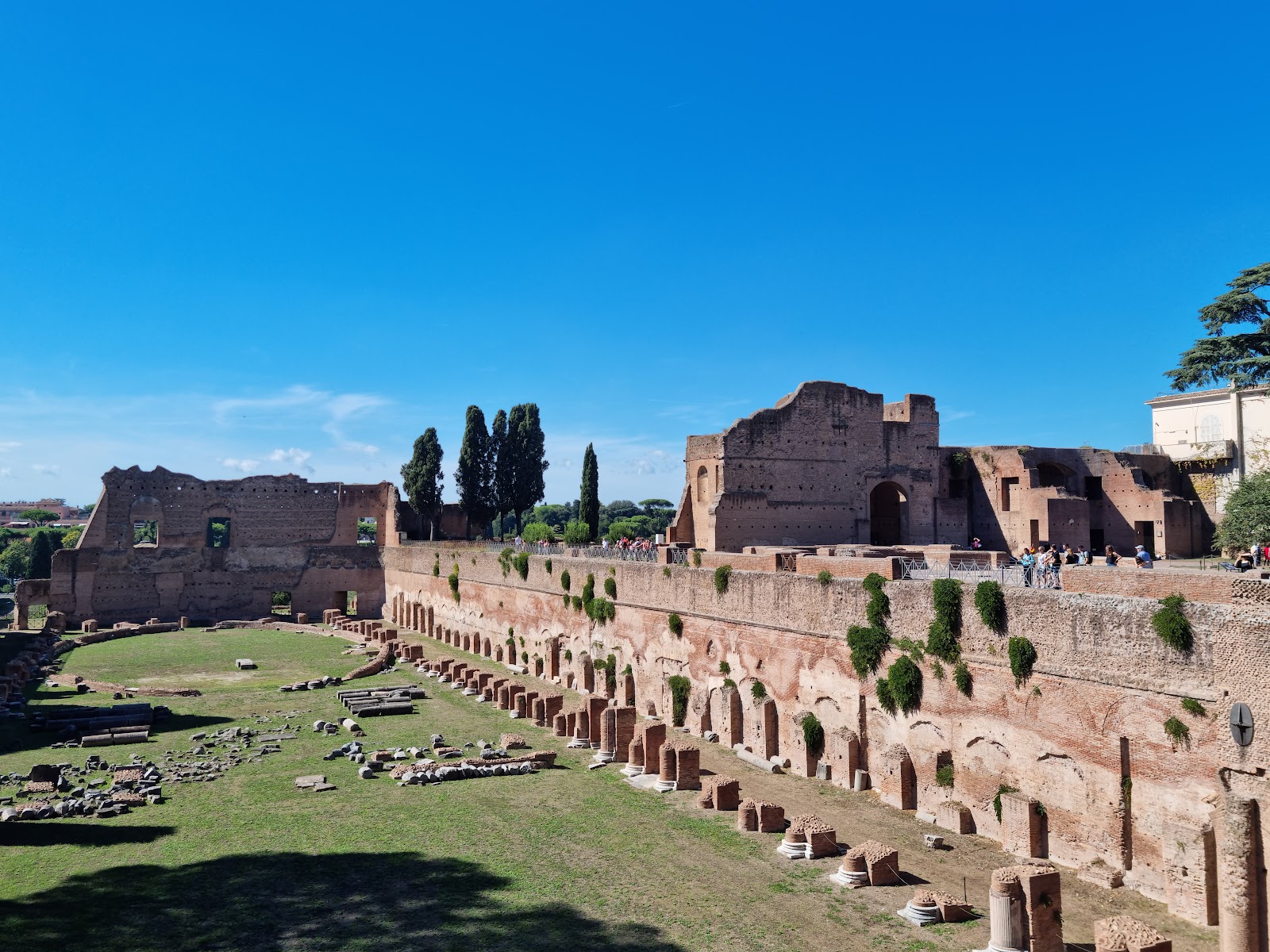
You're up on the Palatine Hill, surrounded by the ruins of the imperial palaces. This is the ground the word "palace" comes from — and it's also a perfect chart of how fast absolute power rots a person.
This hill is also where Rome believed it was born. Somewhere on the slope below was the Lupercal, the cave where a she-wolf supposedly found and nursed the abandoned twins Romulus and Remus. Augustus, the first emperor, made a great public show of restoring it, wrapping himself in the founding myth. And in two thousand seven, archaeologists drilling under the ruins turned up a lost, richly decorated grotto that may well be it — the founders' cave, still giving up secrets.
It started with restraint. The first emperor, Augustus, chose to live up here in a deliberately modest house. Nice, not obscene. He was selling the idea that he wasn't a king, just a humble first citizen doing his duty. It was pure public relations, and it worked. In private he was odder — he had a whole team of barb
ers working on him at once, gambled constantly, and, according to his biographer, liked to keep a written ranking of his dinner guests by how boring they were, seating the dullest ones as far from himself as the table allowed.
You can still step into the rooms Augustus actually lived in, their walls covered in delicate painted scenes, genuinely restrained for the man who ruled the world. And when