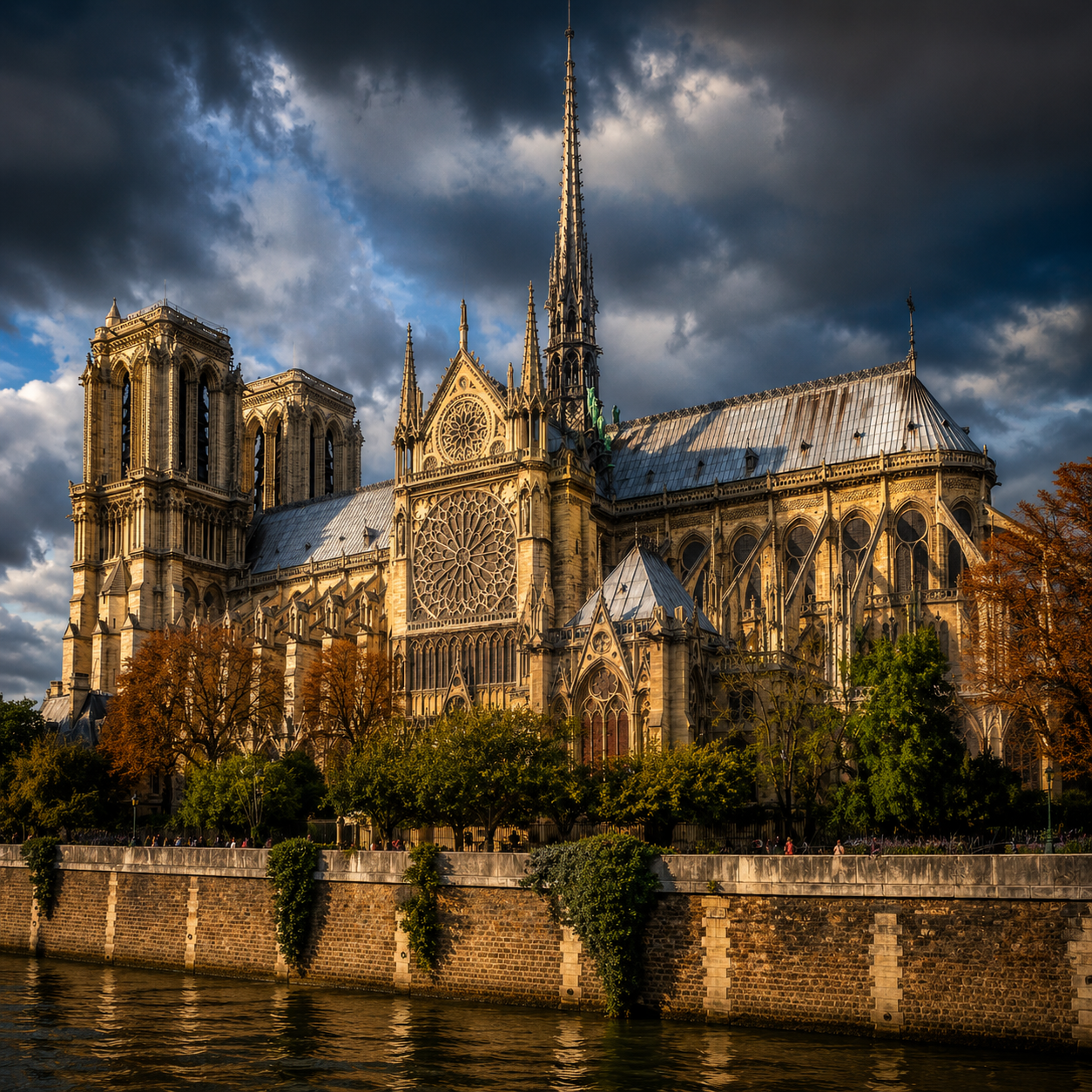
There she is. Notre-Dame de Paris. And notice the color — that stone is PALE. Almost glowing. For most of living memory this building was gray with soot, and now it looks the way it did when it was young. You're looking at something eight hundred years old that is also, in large part, brand new.
You know why. In April twenty nineteen the roof and the spire burned while the whole planet watched. What happened next is the part I love. The rebuilding of Notre-Dame turned into the largest medieval construction site on Earth — run in the twenty-first century.
Two thousand craftspeople. A thousand oak trees. And the carpenters shaped those beams the way the original crews did — by hand, with axes, working the oak green and fresh. That's how the first roof was built, and they wanted the new one to behave the same way. Grown adults spent years learning to swing a medieval axe properly so a cathedral roof would flex like its ancestor. For the stone, there was a problem: the original limestone
came from quarries underneath Paris, and those are long closed. So geologists followed the same seam of stone north out of the city until they found the identical layer, and cut the repairs from that. Same rock. Different door.
And while the restorers worked, the building talked back. They found hundreds of masons' marks — little personal symbols the medieval workers carved into their stones, ea