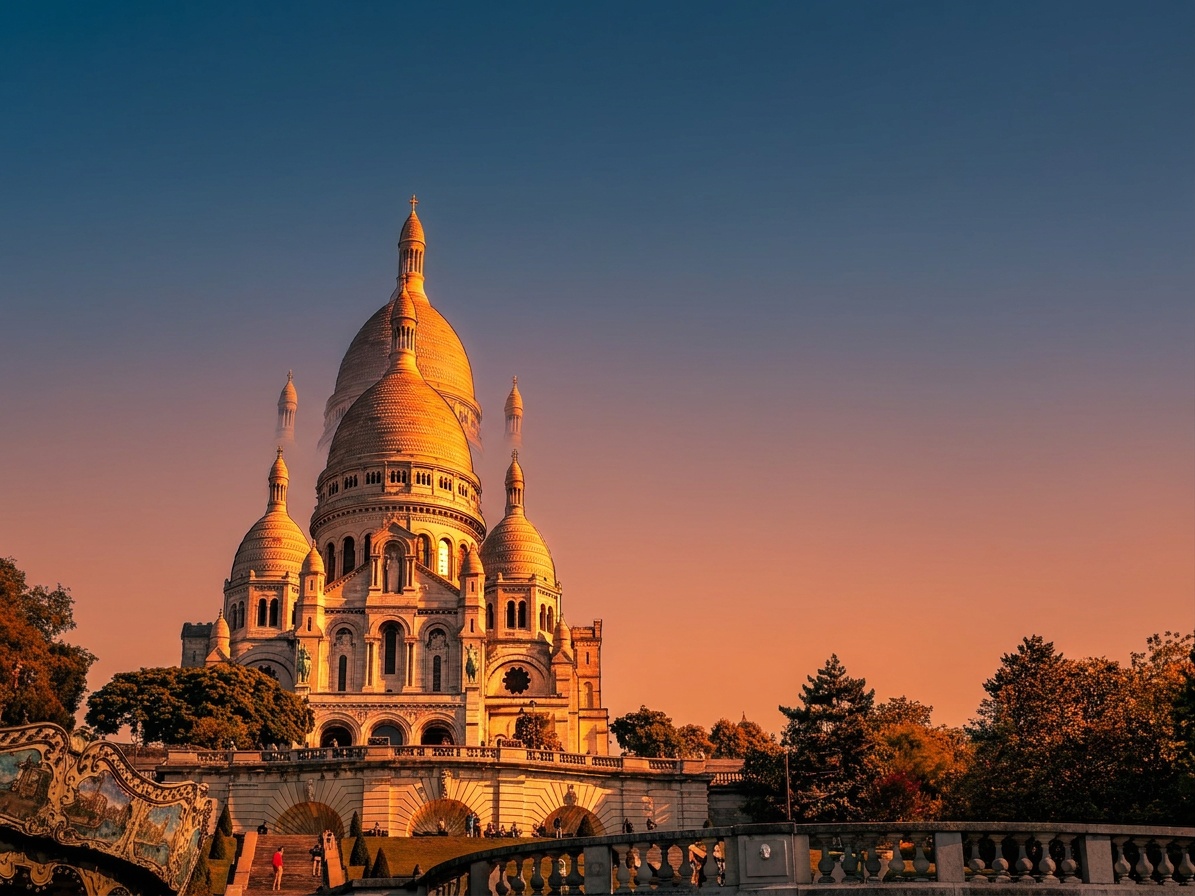
That white church on the hilltop. Eleven million visitors a year, and Parisians STILL argue about whether it should be here.
Here's why. In eighteen seventy, France lost a war to Prussia — badly. A Catholic businessman named Alexandre Legentil had made a vow during the siege of Paris. If God spared the city, he'd fund a church of atonement. Paris survived. Legentil paid up. The National Assembly passed a law in eighteen seventy-three declaring the church to be of public utility. The stated purpose was atonement for France's moral failings.
Now — the site they chose. This exact hilltop. This is where the Paris Commune began on March eighteenth, eighteen seventy-one. Government troops came up to seize the cannons stored here. Local women and soldiers refused to move. Two generals were dragged to a garden and shot by their own men. That triggered the Commune — a seventy-two-day working-class uprising that the French government crushed with a massacre. Ten to twenty thousand people kille
d in a single week.
And THEN the government built a church of atonement on the exact same spot. For people on the left, this wasn't a religious monument — it was a political humiliation. A giant white finger wagging at the working class from the top of their own hill. Left-wing senators blocked it from being classified as a historic monument as recently as twenty twenty-two. Over a hundred and fi