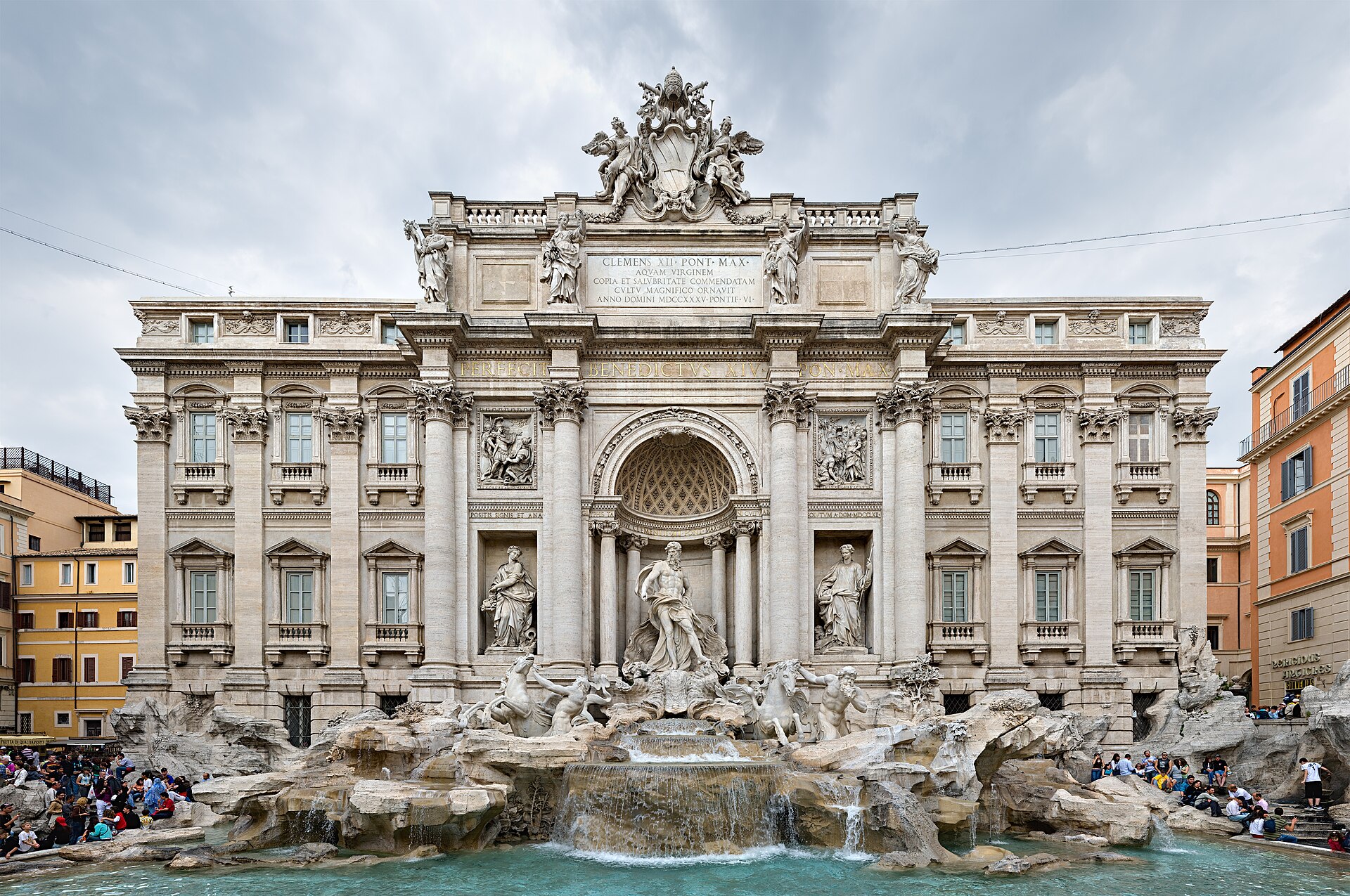
You hear it before you see it. Then you turn the corner and the whole thing hits you at once — a Baroque explosion of gods and horses and crashing water, built straight into the back wall of a palace, far too big for the little square trying to hold it. The Trevi Fountain. And the water pouring through it is arguably the oldest working machine in the world.
That water arrives through an aqueduct called the Aqua Virgo, which the Romans finished in the year nineteen before Christ. It has been carrying water into the center of Rome, by gravity, for more than two thousand years, essentially without a day off. When you watch the Trevi Fountain gush, you are watching an aqueduct that predates the Colosseum still doing its one job. The name Virgo comes from a legend that a young girl led thirsty Roman soldiers to the hidden spring that feeds it — and she's up there on the fountain, pointing the soldiers to the water.
The fountain hides a bit of pettiness, too. See the big carved stone urn o
ff to one side? The story goes a local barber kept loudly criticizing the design while it was being built, so the architect planted that oversized urn right where it would block the barber's view of the finished masterpiece. A permanent marble insult, aimed at one annoying critic.
Then there's the money. The tradition is you throw a coin over your shoulder to guarantee you'll come back to Rome, a